
Design & Selections / Finishes
Finishes
Finish is the last major decision before cabinetry goes into production, and the one that determines how the space actually reads once it's built.
How to Choose
What Actually Matters When You're Choosing a Finish
Start with whether you want the wood grain visible — that decides stain versus paint before anything else. From there, think about how the space is used day to day. A busy kitchen sees more daily wear than a butler's pantry, and every finish holds up differently to that use, especially around handles and edges.
Finish Options
Four Finish Types
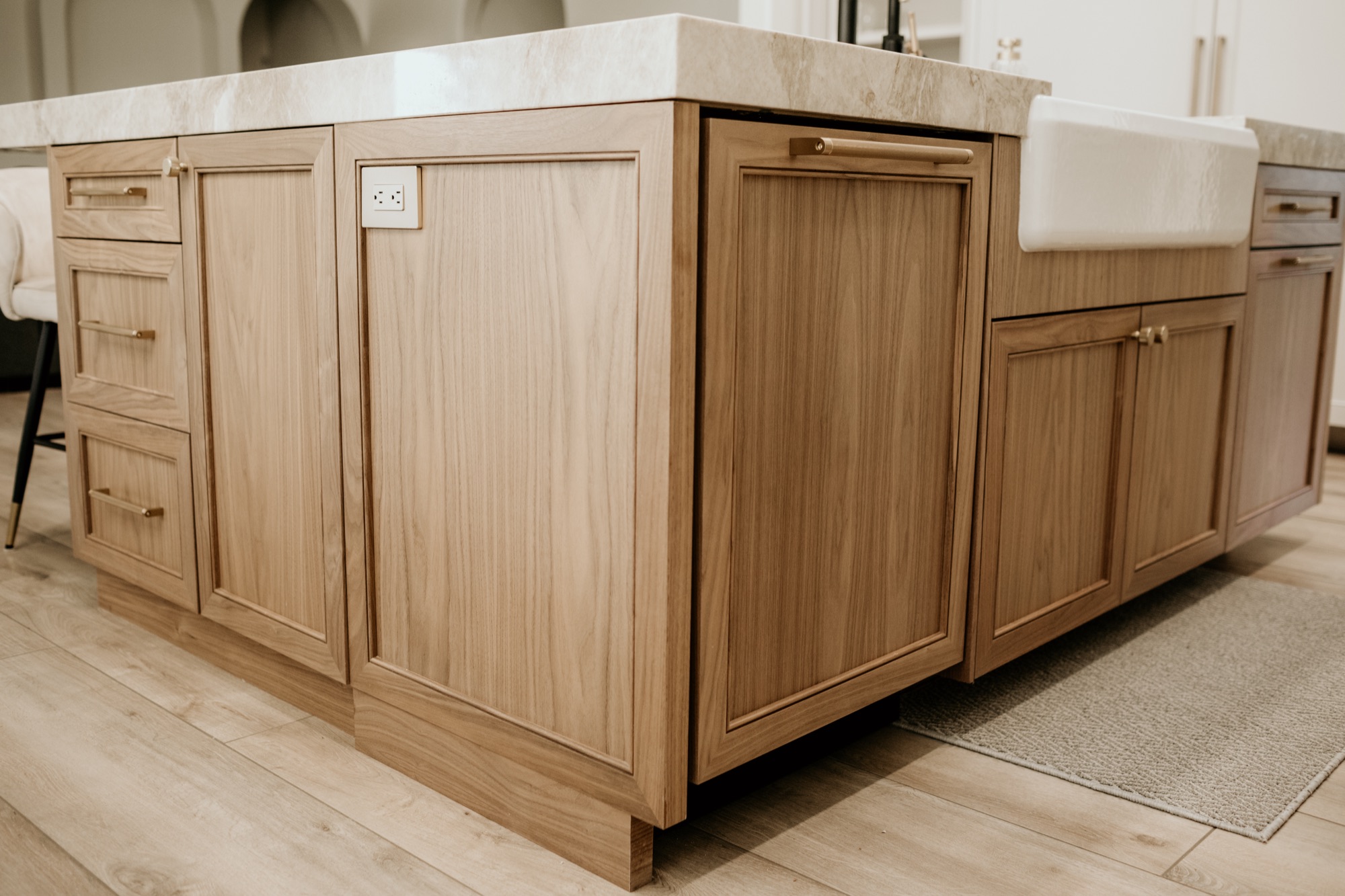
Lets the wood grain show through, in tones from a light natural look to a deep, near-black finish. The species you choose affects the final result as much as the stain color does.
A solid, even color that hides the wood grain entirely. Works on any species, though smoother, tighter-grained woods give the cleanest result.
A second, translucent layer applied over stain or paint and wiped back to settle into corners and detail. Adds depth and an aged character to a raised panel or traditional door.
Stain or paint matched to an existing sample — flooring, trim, or an adjacent room's cabinetry — so new cabinetry blends with what's already there.
| Finish | Look | Durability | Maintenance |
|---|---|---|---|
| Stain | Shows wood grain | High | Low |
| Paint | Solid, even color | High | Low to moderate — chips show more than stain wear |
| Glaze | Depth, aged character | High | Low |
| Custom Color Match | Matches existing material | Depends on base finish chosen | Same as the base finish |
What Pairs Well
Finish, Species, and Door Style
A finish decision only makes sense alongside species and door style. Stain depends entirely on the species underneath it — the same stain color looks different on maple than on oak. Paint is more forgiving of species choice, which is why it's often paired with more budget-friendly, paint-grade woods like alder.
See It in Person
See the Samples in Person
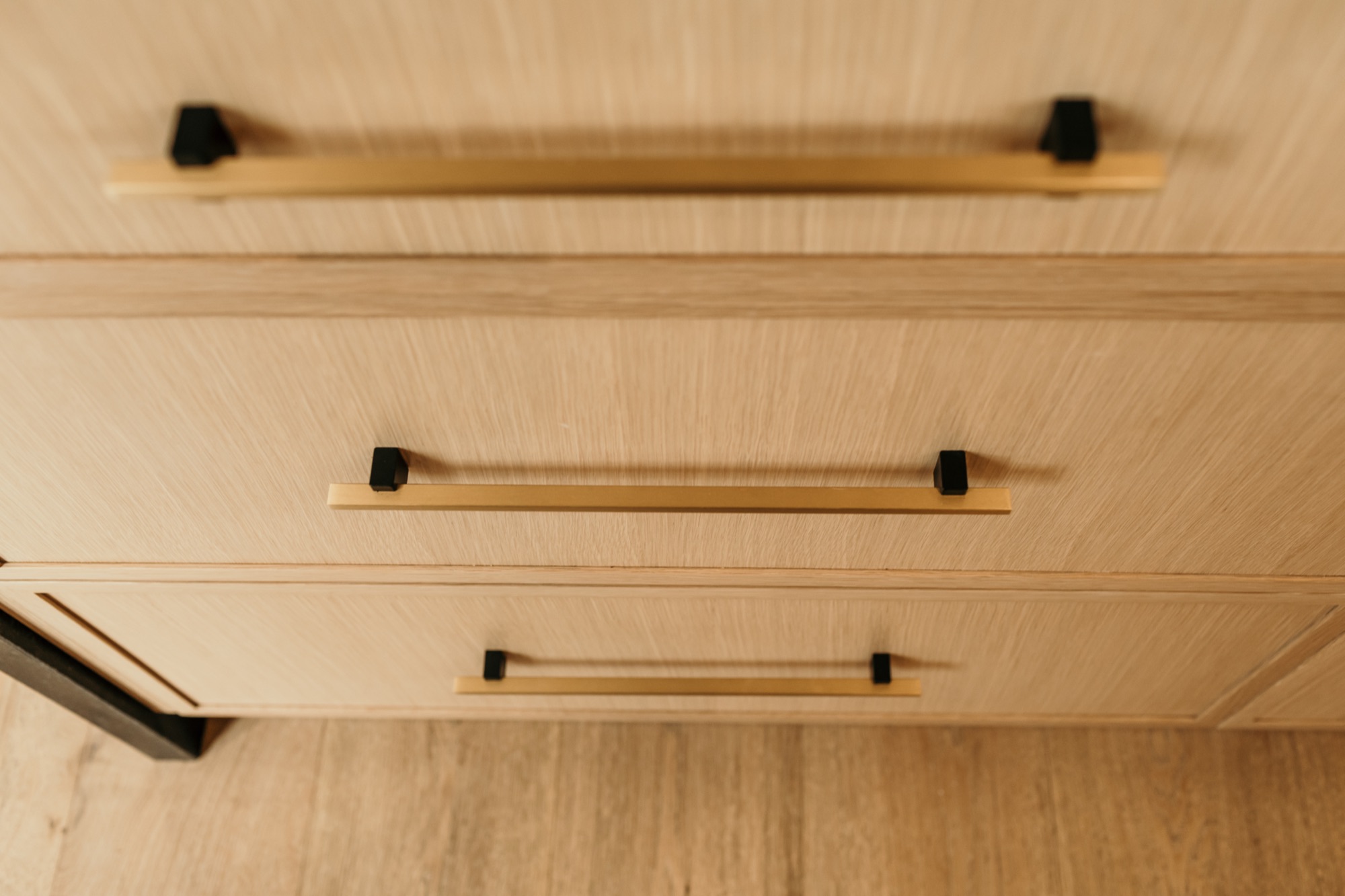
Screens and photos don't show true color. Visit the showroom and see real finish samples before you decide.
Schedule a Showroom Visit